




Mentor Mentee Roles: Responsibilities, Benefits, and Best Practices
 Omer Usanmaz
·
17 minute read
Omer Usanmaz
·
17 minute read
Mentorship is one of the most powerful drivers of career development and professional growth. Whether you're exploring how to find a mentor, launching a workplace mentoring program, or trying to understand what a mentor is and what they actually do, this guide covers everything, from defining the mentor-mentee relationship to building scalable, structured mentorship programs inside organizations.
As a mentor, your primary role is to support and guide your mentee through their unique developmental needs, career aspirations, and professional growth journey. Mentorship, whether part of formal mentorship programs or through informal mentoring relationships, requires an understanding of the definition of mentorship, different approaches to mentorship, excellent communication skills, active listening, and a clear framework for mentorship. Throughout the mentoring process, you will find yourself adopting various roles to help your mentee reach personal and professional success, all while managing realistic expectations and fostering successful mentor-mentee relationships.
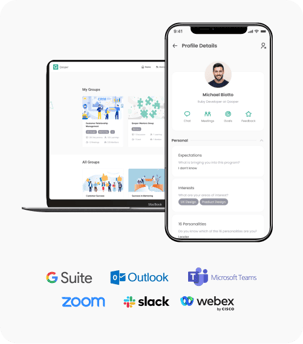
Organizations looking to maximize these benefits increasingly rely on platforms like Qooper, which streamline the matching process, track mentor-mentee engagement, and provide tools for ongoing mentorship intervention, making career development more accessible and effective.
Understanding the Mentor and Mentee Meaning
Before diving deeper into the mentorship process, it’s helpful to clearly define what is a mentee and mentor. A mentor is an experienced professional who offers guidance, feedback, and knowledge to help another individual grow, typically in their career or personal development. A mentee, on the other hand, is the person being mentored, someone eager to learn, improve, and reach specific mentoring goals through structured or informal mentoring relationships.
In a successful mentor-mentee relationship, both sides benefit. The mentor refines leadership and communication skills while contributing to someone’s growth, and the mentee gains direction, confidence, and actionable insights. Understanding this relationship between mentor and mentee ensures that expectations are clear from the start and lays the groundwork for a successful mentoring relationship.
Organizations looking to maximize these benefits increasingly rely on platforms like Qooper, which streamline the matching process, track mentor-mentee engagement, and provide tools for ongoing mentorship intervention, making career development more accessible and effective.
Download Mentor Mentee Matching Template
What Is Mentorship? Definition and Key Concepts
The mentorship definition goes beyond a simple transfer of knowledge. Mentorship is a purposeful, ongoing relationship in which a more experienced individual (the mentor) guides a less experienced person (the mentee) toward specific personal, academic, or career goals. It encompasses coaching, emotional support, networking, and advocacy, making it one of the most holistic forms of professional development available.
Unlike a one-off training session or a formal performance review, mentoring is relational and adaptive. It evolves with the mentee's needs and deepens over time. Key elements that distinguish true mentorship from other development formats include:
- Trust and confidentiality — conversations remain private, enabling honest dialogue.
- Two-way learning — both mentor and mentee grow through the exchange.
- Goal orientation — sessions are tied to defined outcomes, not general conversation.
- Long-term commitment — meaningful mentorship unfolds over weeks, months, or years.
Understanding what mentorship truly means helps both organizations and individuals approach it with the right expectations, which is critical to program success.
Examples of Mentorship and the Roles Involved
When thinking about examples of mentorship, it’s important to recognize that mentoring relationships can take many forms, from a senior mentor guiding a new hire through workplace dynamics, to a faculty mentor helping students navigate academic challenges. In all cases, the foundation is the same: mutual respect, trust, and shared learning.
In comparing mentor vs mentee, the distinction lies not in hierarchy, but in purpose. The role of a mentor is to coach, challenge, and empower. Mentors draw from experience, provide perspective, and serve as role models, these are essential roles of mentoring. Meanwhile, mentees take ownership of their growth, actively seeking feedback, setting goals, and translating insights into action.
Whether in corporate mentoring programs or academic settings, each mentor/mentee relationship thrives on clarity, communication, and alignment. Understanding the role of a mentor and the complementary mentee responsibilities helps ensure that both individuals benefit from the partnership.
Mentorship Communication Plan Template
What are the Mentor’s Roles?
Coach / Advisor
You will offer career advice, guidance, and feedback while sharing your own career experiences. Mentors often draw from advanced knowledge and personal development insights to steer mentees through their challenges. While it may be tempting to offer direct solutions, practicing active listening and using probing questions helps mentees reflect and internalize lessons, encouraging self-directed learning and supporting their career goals.
Related article: Coaching vs Mentoring: Breaking Down the Difference
Devil’s Advocate
This role pushes the mentee to think critically, helping them evaluate decisions and anticipate consequences. Through constructive criticism, delivered with empathy and respect, you help mentees develop behavioral strategies that align with realistic expectations on their career path, strengthening their decision-making and leadership skills.
Resource Person
Mentors play a key role in helping mentees access networking opportunities by leveraging social networks and network ties. You might recommend books, offer scholarship opportunities, or introduce mentees to potential mentors or faculty mentors. This social capital significantly impacts career development, academic benefits, and career advancement.
Support System / Cheerleader
You offer motivation and emotional support, especially when mentees face career-related setbacks. Celebrating small wins, supporting mentees through challenging mentoring sessions, and acknowledging their efforts builds positive interactions and contributes to employee retention and professional development.
In structured mentoring programs, mentors may also act as sponsors , advocating for mentees in key organizational spaces, recommending them for opportunities, and ensuring visibility. This advocacy complements other Mentor Roles and strengthens employee engagement and retention rates.
Additional Mentor Roles and Professionalism in Practice
Beyond the Coach/Advisor, Devil’s Advocate, and Resource Person, mentors often adopt hybrid roles based on their mentee’s learning style and developmental needs. Emphasizing professionalism, clear communication, and a supportive attitude ensures that each role, whether guiding through counseling, promoting self-confidence, or reinforcing core values, contributes to long-term growth.
In structured mentoring programs, mentors may also act as sponsors, advocating for mentees in key organizational spaces, recommending them for opportunities, and ensuring visibility. This advocacy complements other Mentor Roles and strengthens employee engagement and retention rates.
How to Be a Good Mentor: Practical Qualities and Habits
Searching for how to be a good mentor is one of the most common questions among newly assigned or aspiring mentors, and for good reason. Great mentorship doesn't happen by default; it requires intentional habits and self-awareness. Here are the qualities and practices that consistently define effective mentors:
- Active listening over advice-giving — Resist the urge to jump straight to solutions. Ask open questions and let the mentee arrive at their own insights.
- Consistency and follow-through — Show up on time, remember previous conversations, and do what you say you'll do.
- Constructive feedback delivery — Frame feedback around behavior and growth, not personality. Specific, timely, and kind feedback is far more useful than vague praise.
- Celebrating progress publicly — Advocate for your mentee in rooms they're not in. Recommend them for stretch projects, speaking slots, and promotions.
- Setting boundaries clearly — Define what you can and cannot offer. A mentor who acknowledges their limits builds more trust than one who overextends and underdelivers.
- Modeling vulnerability — Sharing your own failures and lessons learned normalizes imperfection and builds psychological safety.
Good mentors are also perpetual learners. The best mentor-mentee relationships are reciprocal, you don't just teach, you grow.
What is Expected of the Mentor?
- Be Available: While not expected to be constantly accessible, being present during critical career stages, such as key presentations or transitions, can greatly influence the mentee’s confidence and performance.
- Withhold Judgement: Mentorship requires adopting an ecological systems theory perspective, appreciating diversity in backgrounds, values, gender identification, and more.
- Be Trustworthy: Honor commitments and ensure confidentiality. The mentoring relationship builds on mutual respect, accountability, and trust.
Ready to Equip Your Mentors for Success?
What are the Mentee’s Roles?
Clarity in the Roles of the Mentee and Mentor builds mutual accountability. Mentees benefit most when they identify their learning opportunities early on and stay proactive, while mentors tailor their guidance to the mentee’s preferred learning style. Together, they create a cycle of progress reinforced through regular feedback requests and recap emails after meetings.
Planner
The mentee must drive the relationship forward by managing logistics like meeting scheduling and defining outcome expectations. Taking initiative ensures mentees maximize the benefits of mentorship while balancing career costs.
Investigator
Successful mentees are curious and proactive, using the mentorship process as a learning experience. Asking questions, seeking clarification, and following up frequently ensure deeper understanding and alignment with their career journey.
Student
Mentees are expected to absorb insights and act on feedback. Whether navigating career choice processes or learning about the scientific community’s values, like the model with biology, continuous learning is key.
What is Expected of the Mentee?
- Follow Through on Agreements: Accountability is critical. Taking action on guidance leads to better career outcomes and personal development.
- Give and Receive Feedback: Constructive feedback is a two-way street. Mentees should provide feedback on the mentorship experience and remain open to advice, even when it challenges their comfort zone.
Empower Your Mentees to Take Charge of Their Growth
Setting Mentorship Goals for the Mentee
Clear and measurable mentorship goals for the mentee are what turn mentoring conversations into meaningful outcomes. Mentees can start by identifying S.M.A.R.T. goals — specific, measurable, achievable, relevant, and time-bound — to structure their development journey. Examples include improving active listening skills, building self-confidence, expanding professional networks, or mastering skill development areas that align with career growth.
When setting mentee goals and objectives, mentors can help by offering feedback requests, reviewing progress reports, and sending a recap email after mentoring sessions to ensure clarity and accountability. These habits reinforce professionalism and consistent learning.
Modern mentoring platforms such as Qooper support these interactions through tools like mentorship matching software, automated scheduling, and analytics dashboards that use data to track engagement and outcomes. Whether through in-person meetings or virtual mentoring programs, such digital platforms improve accessibility and employee engagement, strengthening employee retention rates in the long term.
How to Find a Mentor: A Step-by-Step Guide
- Define what you need. Before reaching out to anyone, articulate your goals. Are you seeking industry knowledge, leadership development, job search guidance, or technical skill-building? A clear ask makes it far easier for a potential mentor to say yes.
- Look within your existing network first. Former managers, professors, senior colleagues, and industry contacts are often the best starting points. Shared context makes rapport easier to build.
- Use structured programs. Corporate mentorship programs, alumni networks, professional associations, and platforms like Qooper exist specifically to match mentors and mentees. These are especially valuable if your immediate network is limited.
- Make a specific, low-pressure ask. Instead of "Will you be my mentor?" try "Would you be open to a 30-minute conversation about your career path?" Start small, demonstrate initiative, and let the relationship grow naturally.
- Prepare for every meeting. Come with an agenda, a question list, and an update on anything you discussed last time. Nothing signals you value someone's time better than preparation.
Finding the right mentor is not a one-time event, it's an ongoing process. Many professionals benefit from having a developmental network: a small group of mentors who each offer different kinds of guidance.
Mentorship can also extend beyond traditional formats. Reverse mentoring, for instance, allows junior employees to share digital insights or new trends with senior mentors, fostering two-way learning opportunities and reinforcing the organization’s core values. Some companies even use virtual reality or training videos during orientation to simulate real-world mentoring experiences.
Finally, a strong Mentoring Agreement clarifies expectations — outlining meeting frequency, confidentiality, and mentoring responsibilities. This foundation supports both the Coach/Advisor and Resource Person roles, helping mentees feel guided, supported, and aligned with the program’s mission.
Mentorship today is powered by digital platforms that make learning more flexible and inclusive. Virtual mentoring programs, video orientations, and even training videos allow mentors and mentees to connect across time zones. Using data from mentorship matching software helps both sides track engagement, assess learning outcomes, and adjust goals based on progress reports.
Mentor Mentee Matching Survey
Reverse Mentoring: What It Is and Why It Works
Reverse mentoring flips the traditional dynamic: junior or younger employees mentor senior leaders, typically around topics like emerging technology, digital tools, social media, or diversity and inclusion perspectives. Originally popularized at companies like GE, it has become a mainstream practice in forward-thinking organizations.
Why does it work? Because knowledge doesn't flow in only one direction. Senior leaders often have the strategic vision and experience, but they can be disconnected from the day-to-day digital realities, cultural shifts, or generational expectations that shape their workforce. Reverse mentoring bridges that gap.
Key benefits of reverse mentoring include:
- Keeps senior leaders informed on digital trends and new tools without formal training programs.
- Gives junior employees visibility, confidence, and access to executive-level thinking.
- Strengthens cross-generational relationships and reduces workplace silos.
- Reinforces a culture where learning is valued at every level of the organization.
For reverse mentoring to succeed, it requires the same structure as traditional mentoring: clear goals, a safe environment, and genuine commitment from both parties, especially the senior leader, who must approach the sessions with humility and openness.
Benefits of Mentoring Programs To the Mentee
Mentees experience a range of academic benefits and career development advantages from mentorship, including:
- Clarified career goals and a well-defined career path
- Access to valuable networking opportunities and expanded social networks
- Enhanced confidence through receiving career advice and emotional support
- Practical action plans for professional growth and navigating career faculty expectations
- Increased mentor-mentee engagement that leads to higher persistence in their fields of study
Platforms like Qooper Mentoring Software facilitate these outcomes by enabling mentees to connect with senior employees and potential mentors whose expertise matches their unique needs.
Key Benefits of Mentorship Program to the Mentor
Mentors also gain significantly from their involvement, experiencing:
- Enhanced leadership and communication skills by serving as a role model
- Opportunities to refine approaches to mentorship and learn from diverse mentees
- Personal satisfaction and career fulfillment from contributing to others’ success
- Expanded personal connections and professional networks
- Improved understanding of career costs and dynamics through an empirical study of mentorship outcomes
Using tools like Qooper, mentors can track their progress, manage mentoring sessions, and receive insights into the effectiveness of their mentorship.
Mentorship and Employee Engagement: What the Data Shows
Employee engagement is one of the most searched topics in HR and people management, and mentorship is one of its strongest levers. Research consistently shows that employees who have a mentor at work are more engaged, more likely to stay at their organization, and more likely to advance into leadership roles.
Here's how effective mentoring programs directly impact employee engagement:
- Onboarding acceleration: New hires paired with mentors reach full productivity faster and report higher job satisfaction in their first 90 days.
- Retention: Employees who participate in mentoring programs are significantly more likely to remain at their company for two or more years compared to those who don't.
- Career advancement: Mentored employees are promoted at higher rates than their non-mentored peers, which increases engagement by signaling that career growth is possible.
- Sense of belonging: Especially for underrepresented groups, having a mentor signals that the organization is invested in their success, a critical driver of inclusion and psychological safety.
For HR and L&D leaders, mentoring programs are among the highest-ROI investments in the employee engagement toolkit, particularly when supported by platforms that can match, track, and measure outcomes at scale.
30-60-90 Day Onboarding Plan Template
Ethical Responsibilities and Mental Health in Mentorship
A mentor’s duty goes beyond sharing knowledge, it extends to safeguarding the mental health and well-being of their mentees. In some mentoring relationships, particularly in research or academic settings, mentors may provide counseling, refer mentees to institutional resources, or guide them through moments of psychological distress. Addressing sensitive issues like research misconduct with professionalism and empathy reinforces trust within the mentorship.
Maintaining professionalism, understanding research misconduct, and respecting confidentiality are critical aspects of the mentor role description. Mentors should encourage open communication while being mindful of boundaries.
In structured programs, mentors can use mentoring job descriptions, certification pathways, and training videos to reinforce best practices. Progress reports, referrals, and connections to alumni or the research community also enhance mentees’ exposure to real-world experiences.
Ultimately, great mentors act as Champions, supporting not only professional growth but also personal resilience, ethics, and integrity within every mentor-mentee relationship
The Importance of Mentors and Mentees in the Workplace
Mentorship fosters growth for both junior employees and senior employees, supporting career development at all levels. Studies show that high-performing individuals, including highly qualified doctoral students and college students, benefit significantly from engaged mentor-mentee relationships. Organizations that cultivate mentorship see improved job satisfaction, retention, and stronger leadership pipelines.
Build a Strong Mentorship Culture in Your Organization
Should Mentorship Be Informal or Formal?
Formal mentorship programs provide structure, clear goals, scheduled mentoring sessions, and measurable outcomes, while informal mentorship thrives on personal connections and flexible interaction patterns. Both have distinct advantages and challenges:
- Formal programs reduce issues like poor mentor-mentee matching, but may feel rigid.
- Informal mentorship allows organic development but risks inconsistency and a lack of accountability.
A hybrid approach often balances reasonable expectations and maximizes the influence of mentorship across organizational levels.
Build a Mentor and Mentee Program in the Workplace
To create a successful program, consider these steps:
- Identify potential mentors with attributes like empathy, availability, and relevant expertise.
- Match mentors and mentees thoughtfully based on goals and career faculty input.
- Set clear goals of mentoring aligned with the organizational career development objectives.
- Use technology for scheduling, tracking mentorship engagement, and facilitating mentorship intervention if needed.
Platforms like Qooper simplify this entire process, offering intuitive dashboards, automated matching, and progress analytics. - Promote a culture that values mentorship and social networks, recognizing the patterns of interactions that build trust and engagement.
Insight into the Mentor-Mentee Relationship
Successful relationships rely on mutual commitment, respect for reasonable expectations, and recognition of the difference between mentor and mentee roles. Research reveals that mentor-mentee engagement fosters academic benefits, networking opportunities, and advantageous benefits for both parties. Understanding connection patterns and the degree of connection, from superficial to deeply supportive, helps optimize interactions.
Effective mentorship should embrace diversity, acknowledge human behavior complexities, and navigate selfish actions versus cooperative relationships among persons.
Tips for a Successful Mentorship Program
- Define clear objectives for mentors and mentees based on the organization’s strategic priorities.
- Train mentors and mentees on expectations, communication, and realistic expectations to build trust.
- Leverage technology such as Qooper to facilitate matching, scheduling, and performance tracking.
- Encourage feedback loops between mentors and mentees to continually improve the program.
- Foster a supportive environment that values diversity in gender identification, culture, and fields of study.
- Monitor and measure outcomes for mentors and mentees to ensure the program’s impact.
Download our ROI Calculator to easily measure your mentoring program’s success
Great mentorship champions not only individual success but also organizational culture. Mentors and mentees together embody core values sharing, helping bridge generations and disciplines through ongoing collaboration. Whether through in-person meetings or virtual settings, this shared commitment builds strong, lasting professional relationships.
Key Takeaways
- Mentorship is a dynamic relationship crucial for career development and professional growth.
- Both mentors and mentees share responsibilities, including communication, accountability, and openness.
- Formal and informal mentorship approaches have unique strengths; combining them enhances impact.
- Building a mentorship culture supports retention, leadership development, and employee satisfaction.
- Successful mentorship relies on trust, realistic expectations, and continual mentor-mentee engagement.
- Tools like Qooper empower organizations to launch, manage, and measure effective mentoring programs.
Scale the Mentor-Mentee Relationship Across Your Enterprise
Understanding mentor and mentee roles is the foundation — running hundreds of these relationships simultaneously is what enterprise mentoring software is built for. Qooper is an enterprise mentoring software trusted by companies like Merck, BNY, and Harvard to automate mentor matching, structure expectations through program templates, and give program managers real-time visibility into every mentoring relationship across the organization.
Interested in launching or improving your mentorship program?
Schedule a demo with Qooper today to discover how our platform can support your team’s journey to career success with seamless mentor matching, engagement tracking, and actionable insights.
FAQs
What is the difference between a mentor and a mentee?
A mentor is an experienced professional who voluntarily offers guidance, shares knowledge, and provides support to help another person grow. A mentee is the person on the receiving end of that guidance — someone who actively seeks to learn, improve, and reach defined personal or professional goals through the relationship.
The distinction isn't about seniority alone. It's about purpose and posture. The mentor brings experience and perspective; the mentee brings curiosity and drive. In a healthy mentoring relationship, both parties contribute meaningfully — mentors refine their leadership and communication skills, while mentees gain direction, confidence, and access to networks they couldn't build on their own. Neither role is passive.
What does a mentor actually do?
A mentor's role is more varied than most people expect. At its core, mentoring involves listening first and advising second — using probing questions to help the mentee think through challenges rather than simply handing them answers.
In practice, a mentor will share career experiences (including failures, not just successes), offer honest and constructive feedback, help the mentee set and review meaningful goals, make introductions to relevant contacts, and advocate for the mentee in organizational spaces they may not yet have access to. They also provide emotional support during setbacks, help the mentee navigate workplace dynamics, and occasionally play devil's advocate to stress-test decisions. The best mentors are equal parts coach, sounding board, sponsor, and role model.
What is a mentee responsible for in the relationship?
The mentee carries more responsibility than many people initially realize. While the mentor provides guidance, the mentee must drive the relationship forward. This means taking ownership of scheduling, coming to every session with a prepared agenda or specific questions, following through on commitments made between meetings, and actively applying feedback rather than simply receiving it.
A strong mentee also takes responsibility for communicating openly — including flagging when the mentorship isn't meeting their needs. They set clear, measurable goals at the outset, revisit those goals regularly, and keep their mentor updated on progress. The mentee who treats mentorship as a passive experience rarely gets lasting value from it. The one who shows up prepared, accountable, and hungry to grow gets exponentially more out of every conversation.
What are the most important qualities of a good mentor?
The best mentors consistently demonstrate a handful of qualities that go beyond professional expertise. Active listening tops the list — the ability to fully hear what a mentee is saying, including what they're not saying, before offering perspective. Closely related is the willingness to ask questions rather than lecture, trusting the mentee's capacity to find their own answers with the right prompting.
Good mentors are also consistent and reliable. They show up prepared, honor their commitments, and maintain confidentiality without exception. They withhold judgment and create a psychologically safe space where the mentee can be honest about fears, failures, and uncertainties. They celebrate progress without inflating it, and they deliver difficult feedback with both candor and compassion. Perhaps most importantly, great mentors are genuinely curious — they approach the relationship as a two-way learning experience, not a one-directional knowledge transfer.
What are the benefits of a mentor-mentee relationship for both parties?
The benefits for mentees are well-documented: faster career advancement, clearer goal direction, expanded professional networks, stronger confidence, and practical guidance that can take years to acquire through trial and error alone. Mentored employees are also promoted at higher rates and show greater job satisfaction and retention than their non-mentored peers.
What's less often discussed are the genuine benefits for mentors. Mentoring sharpens leadership and communication skills in ways that few other experiences do. It forces mentors to articulate tacit knowledge — the things they know but have never had to explain — which deepens their own mastery. Exposure to a mentee's perspective, career stage, and challenges also keeps mentors connected to realities they may have grown distant from. Many mentors report that the relationship reinvigorates their own sense of purpose and professional identity. It's one of the few workplace activities that creates compounding value for both people simultaneously.
What are best practices for structuring a mentor-mentee relationship?
The most effective mentor-mentee relationships share a handful of structural habits. Start by creating a mentoring agreement — even an informal one — that documents goals, meeting cadence, communication preferences, and confidentiality expectations. This single step removes ambiguity and sets accountability from day one.
Goals should be S.M.A.R.T.: specific, measurable, achievable, relevant, and time-bound. Vague intentions like "get better at leadership" rarely produce results; concrete goals like "lead one cross-functional project by Q3" do. Meetings should have a consistent rhythm (most pairs meet once or twice monthly), and the mentee should send a brief recap email after each session to capture action items and keep momentum alive between meetings. Both parties should periodically step back and assess whether the relationship is still serving its original purpose — and be willing to adjust or formally close it when it has run its course.
How is mentoring different from coaching, managing, or sponsoring?
These terms are often conflated, but they describe meaningfully different relationships. A coach typically works on specific skills or performance outcomes over a defined timeframe, often following a structured methodology. Coaching is usually transactional: here's the gap, here's the process, here's the outcome. Mentoring is broader and more relational — it addresses career direction, professional identity, and long-term growth without a fixed curriculum.
A manager holds formal authority and has an organizational stake in the employee's performance. This power dynamic makes deep vulnerability difficult. A mentor, by contrast, has no direct authority and no performance agenda, which is precisely what makes the relationship safe enough to be honest in. A sponsor is someone who actively advocates for you in rooms you're not in — recommending you for opportunities, promotions, or high-visibility projects. Sponsors and mentors can overlap, but sponsorship is primarily about political capital and action, while mentorship is primarily about development and guidance. The most impactful professional relationships often involve having all three at different stages of your career.
How do you handle a mentor-mentee relationship that isn't working?
Not every mentoring pair is a good match, and recognizing that early — rather than enduring a mismatched relationship out of politeness — is itself a best practice. Signs a relationship isn't working include consistently cancelled or unfocused meetings, a lack of psychological safety, misaligned expectations, or a sense that the mentee has outgrown what the mentor can offer.
The first step is honest conversation. Many issues stem from unspoken expectations rather than fundamental incompatibility, and a direct discussion about what isn't working can reset things productively. If the mismatch is deeper — a clash of values, communication styles, or goals — it's appropriate to formally close the relationship with mutual respect and gratitude for what was shared. In structured programs, program coordinators can facilitate re-matching without awkwardness. The goal is always the mentee's growth, and sometimes that means acknowledging that a different mentor would serve them better.
How do you measure whether a mentoring program is actually working?
Measurement is often the weakest link in organizational mentoring programs, yet it's essential for justifying investment and improving over time. Effective measurement operates at two levels: the individual relationship and the program as a whole.
At the relationship level, success indicators include goal completion rates, the mentee's self-reported confidence and clarity, career milestones achieved (promotions, new roles, expanded responsibilities), and qualitative feedback from both parties on the value of sessions. At the program level, organizations should track participation and completion rates, mentor-mentee satisfaction scores, 360-degree feedback improvements, retention rates among program participants versus non-participants, and time-to-promotion for mentored employees. The most sophisticated programs use mentoring platforms to capture this data systematically, enabling program managers to identify disengaged pairs early, intervene where needed, and continuously refine matching criteria based on what outcomes the data reveals.
How should mentorship goals be set and tracked?
Goal-setting is where many mentoring relationships lose traction. Without clear goals, sessions drift into general conversation that feels good in the moment but produces little lasting change. Effective goal-setting starts at the very first meeting, where mentor and mentee together identify two or three development priorities that are specific, meaningful, and achievable within the mentorship's timeframe.
Each goal should have a visible action plan: what will the mentee do, by when, and how will they know it's been achieved? Progress should be revisited at every meeting — not as a performance review, but as a natural check-in that keeps both parties oriented to what the relationship is for. Recap emails after sessions serve as lightweight accountability tools, capturing what was discussed and what comes next. Mentors can further support this by asking "what's changed since we last spoke?" as an opening question, which signals that between-session progress matters as much as the meeting itself.
.jpg)

-1%20(1).webp)