
Overview
Admins can view participant activity timelines to monitor engagement at both individual and program levels. This includes actions such as meetings, matches, conversations, feedback, and other program interactions.
1. Checking Participant Activity Individually
Steps:
- Sign in to the admin dashboard
- Go to the Matching section
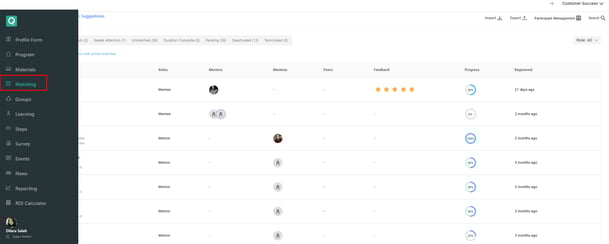
- Find the participant (Matched or Unmatched, or use the search bar)

- Open the participant’s profile
- You will see four tabs:
- Matches
- Activities
- Profile
- Journals
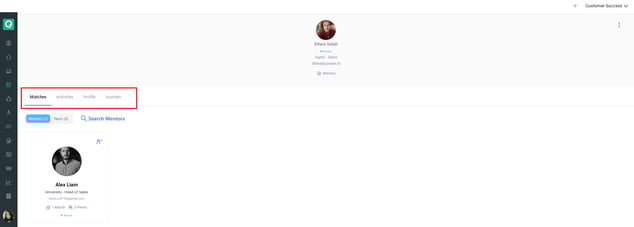
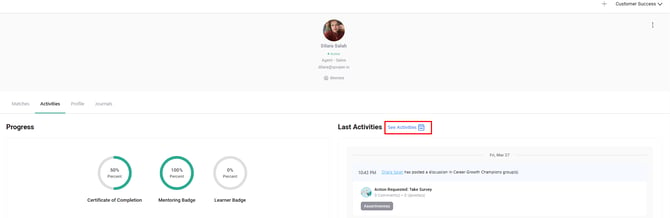
6. Click on Activities
What you can see:
- Latest activity summary
- Badge progress
- Feedback
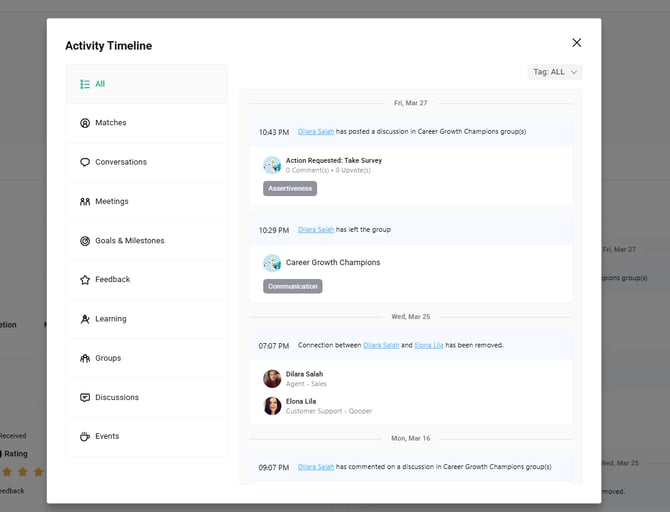
To view full activity details:
Click See Activities, where you can access:
- Matches
- Conversations
- Meetings
- Milestones
- Feedback
- Learning activities
- Groups
2. Checking Program-Level Activity Timeline
Steps:
- Sign in to the admin dashboard
- Go to the Reporting tab
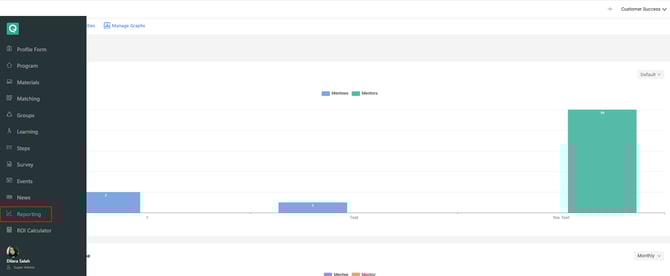
- Click Activities on the left-hand side
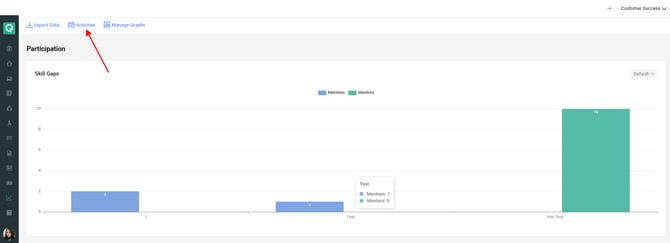
What you can see:
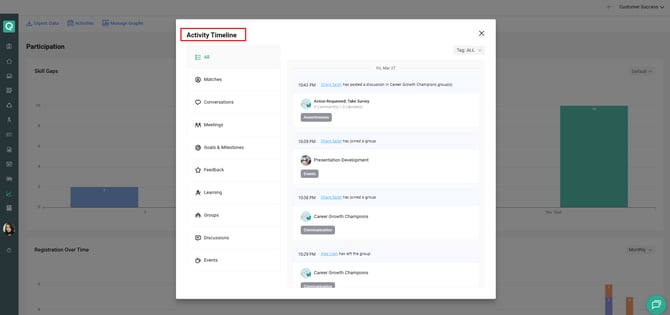
This view shows activity for all participants in the program, not individual users.
You can review:
- Matches
- Conversations
- Meetings
- Feedback
- Learning activities
- Groups
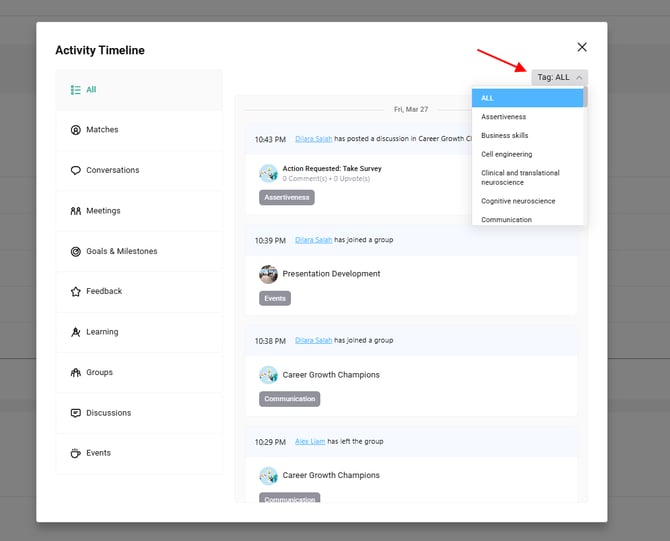
Filters available:
- Tags (All or specific tags)
3. Activity Timeline vs Reporting Graphs Counts
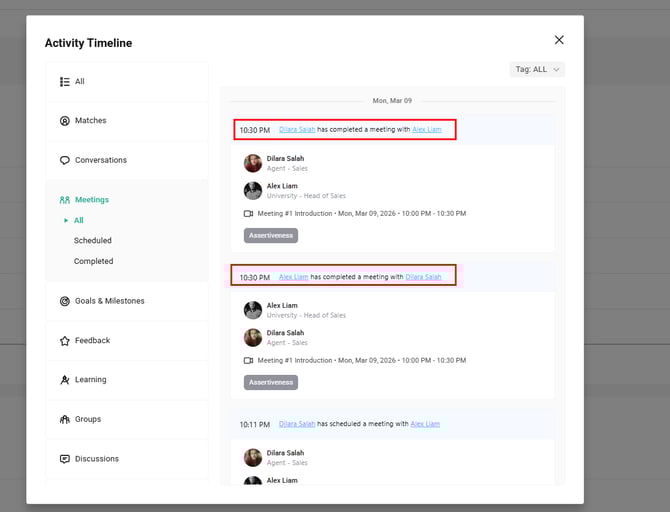
Activity Timeline shows real-time user actions, while Reporting shows aggregated program metrics.
Meeting Example:
- A mentee schedules a meeting with a mentor → activity is logged
- When the meeting is completed → additional activity is logged
This results in:
- Multiple entries in Activity Timeline
- One completed meeting in Reporting graphs
Matching Example:
- A mentee is matched with a mentor → activity is recorded
- When the match is concluded → additional activity is recorded
This results in:
- Multiple activity entries in Activity Timeline
- One match reflected in Reporting participation graphs
4. Key Difference
- Activity Timeline → detailed list of all user actions
- Reporting Graphs → summarized performance metrics
Conclusion
Admins can track participant engagement both individually and at program level using the Activity Timeline. Understanding the difference between activity logs and reporting metrics helps interpret participant behavior more accurately.